
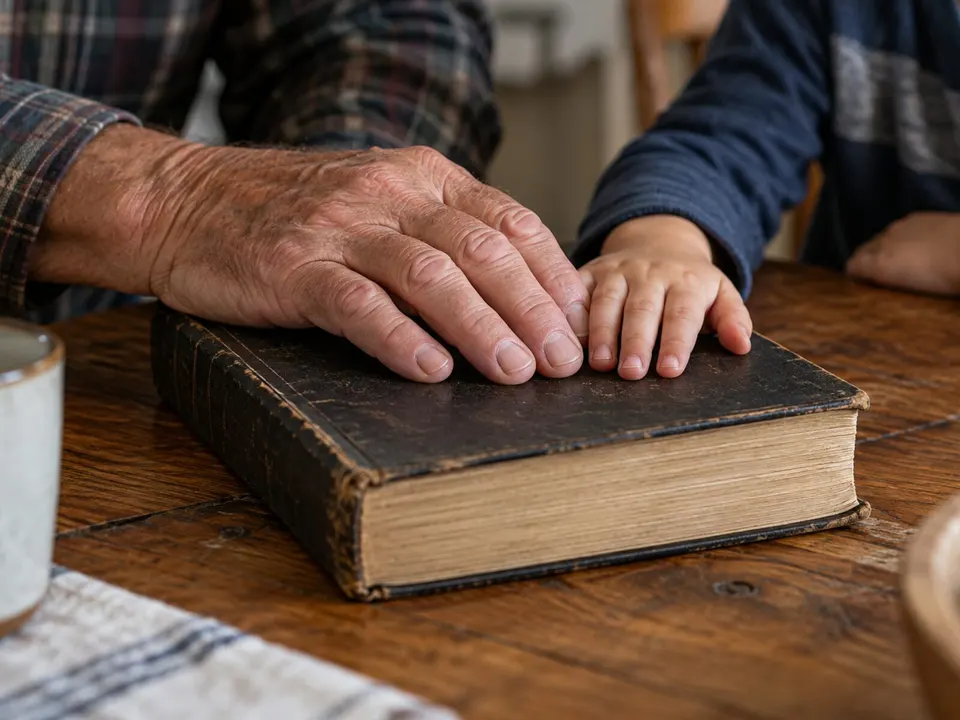
Most of us hope our faith will outlive us. We want our children, and their children, to know and love God long after we are gone. The Bible tells the story of one family that did exactly that, and it holds them up not because they were powerful or famous, but because they were faithful for a very long time. Their example asks a quiet question of every household. What are we doing today that will still be keeping someone faithful a hundred years from now?
An old promise kept
In Jeremiah 35, God points to a family called the Rechabites. Generations earlier, their ancestor Jonadab had given them a set of simple family rules, and they had kept them ever since. When God told Jeremiah to offer them wine, they refused, explaining that their forefather had commanded them not to drink it and they had obeyed “all that he commanded us” (). Hundreds of years, and still faithful to one man’s instruction. God was not endorsing the specific rules about wine and tents. He was using the contrast. If a family could keep a human ancestor’s word for centuries, why would his own people not keep the word of the living God?
Ordinary habits, lasting faith
What held the Rechabites steady was not a single dramatic moment but a pattern of ordinary, repeated obedience. That is usually how faith is passed down. “You shall teach them diligently to your children, and shall talk of them when you sit in your house, and when you walk by the way” (). It is the daily, unglamorous places, the table, the car, the bedtime, where a family’s real convictions get handed over. “Train up a child in the way he should go, and when he is old he will not depart from it” (). The rules and rhythms we set are not ends in themselves. They are tools to keep the next generation close to God.
Tell the next generation
Faithfulness that lasts has to be spoken out loud. The psalmist wrote that we are to tell the coming generation “the glorious deeds of the Lord” so “that the next generation might know them, the children yet unborn” (, ). Families that stay faithful are usually families that talk openly about why they believe, that let the children see the faith lived and hear it explained. Timothy’s faith did not appear from nowhere. It “dwelt first in your grandmother Lois and your mother Eunice” (). A grandmother’s faith can reach a grandchild she will never meet as an adult.
A choice every household makes
Joshua put the decision plainly before Israel: “As for me and my house, we will serve the Lord” (). Every family makes that choice, by intention or by drift. The Rechabites chose on purpose, and they chose again every day for generations. We may not set the same rules they did, but we can set our own, deliberately, so that our traditions and our time point our children toward God rather than away from him.
A line that stands before God
God gave the Rechabites a striking promise. Because they honored their father’s command, “Jonadab the son of Rechab shall never lack a man to stand before me” (). That is a goal worth having for our own families, a long line of descendants who still stand before God, still faithful, long after we are gone. The race is not a sprint but a relay, and we run “with endurance the race that is set before us” (), handing the baton forward. What we do today, the quiet and steady and ordinary faithfulness, is how a family comes to stand before God for generations to come.