
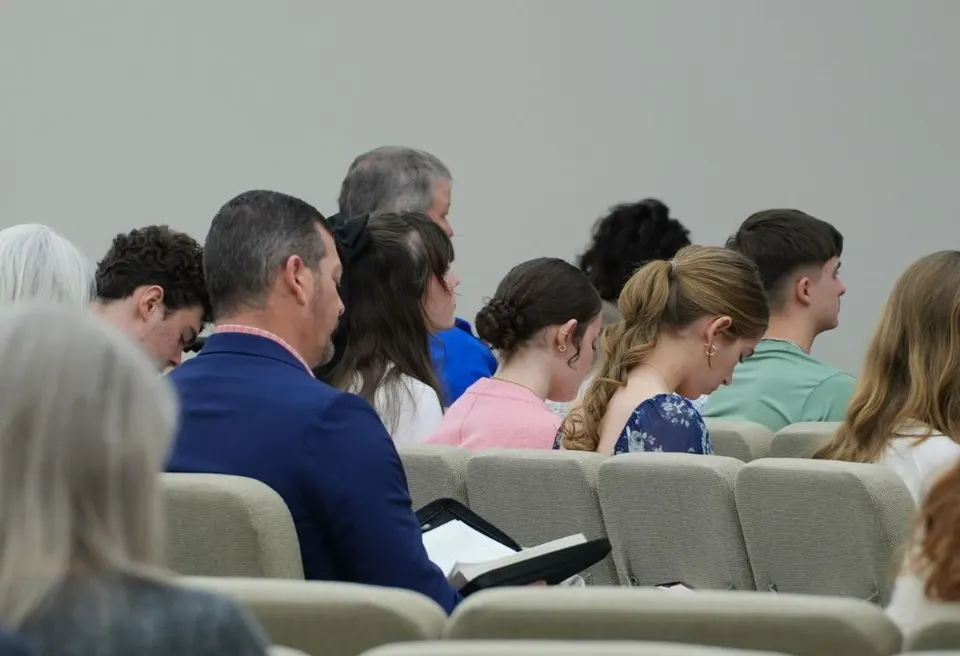
The letters of the New Testament were written to set young churches straight, and they do plenty of that. But they do something else too. They encourage. Paul was not only a corrector, he was an encourager, and the opening of his second letter to the church in Thessalonica holds some of the warmest words he ever wrote to a congregation that was taking a beating for its faith. On Sunday morning Jeff Trahan walked us through 2 Thessalonians 1 and showed where that kind of encouragement comes from.
Encouragement that starts with praise
Paul tells these Christians plainly that their faith is growing and their love for one another is increasing, and he is not shy about saying so. That is worth sitting with, because most of us are clumsy at both ends of a compliment. We either pour it on until it feeds someone’s pride, or we go quiet and leave people wondering if anyone noticed. Paul does neither. He thanks God for them, and then he tells them that is exactly what he is doing. He gives God the credit and still lets them hear the good word. We could learn to do the same for the people around us who are quietly doing well.
A faith that keeps growing
Notice what he praised them for. Not that they had arrived, but that they were still growing and still holding on under pressure. Faith is not a finish line you cross the day you obey the gospel, and it is not a fixed trait you either have or you do not. It is a living relationship of trust, and like any relationship it grows or shrinks depending on what we feed it. These Christians were feeding theirs even while they were being persecuted.
The promises that carry us
Then Paul points them to the promises. There is a reward waiting for those who stay faithful through hard treatment. There is a day coming when the account is settled, when those causing the trouble answer for it and those who suffered find relief. Paul uses hard words in this chapter, affliction and judgment and loss, because the holiness of God is real and sin is serious. But for God’s own people the word is relief: the pressure we carry now will one day be lifted. As an old line puts it, it pays to follow God, but God does not always pay in September. The harvest comes at the end.
Prayer, and the only verdict that counts
Paul closes by telling them he is praying for them, that God would count them worthy of His calling and finish the good work He started in them. That is the quiet point under the whole chapter. The only verdict on our lives that finally matters is God’s. Not what others think of us, not even what we think of ourselves, but how He sees us, and He is at work to make us what He has called us to be.
Take the long view
So take the long view this week. We walk straight out of worship and back into the world, and the struggles are waiting. Let us be the people we are called to be, keep our eyes on the end, and encourage one another to do the same.