
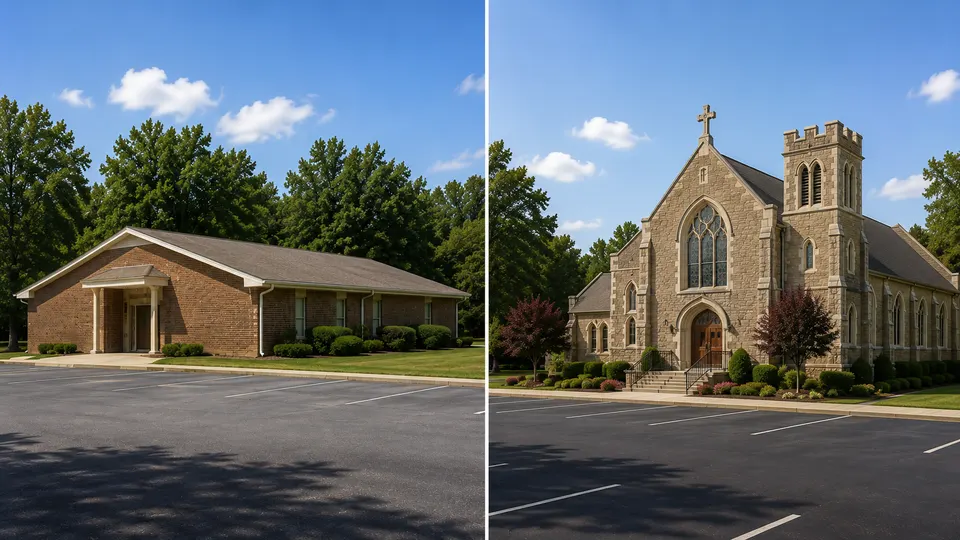
Churches of Christ and the Catholic Church share important beliefs. Both confess Jesus as the Son of God, affirm His death and resurrection, value Scripture, and take Christian faith seriously. Those convictions deserve to be acknowledged.
The clearest difference concerns final authority. The Catholic Church relies upon both the Bible and traditions it believes were handed down from the apostles. The Pope and bishops are given authority to interpret these teachings for the Church. Churches of Christ seek to use the Bible alone as the complete and binding standard for Christian belief and practice.
That foundational difference forms how each group understands church leadership, salvation, baptism, and worship. Our purpose is not to disparage Catholics, but to explain the differences honestly and encourage readers to examine both positions in light of God’s Word.
Where Does Final Authority Rest?
Catholicism teaches that God’s revelation has been handed down through both Sacred Scripture and Sacred Tradition. The Magisterium, the teaching office exercised by the Pope and bishops in communion with him, is entrusted with interpreting that deposit of faith. Under particular conditions, its doctrinal teachings are binding upon Catholics.
Churches of Christ do not recognize an authoritative tradition, council, or teaching office alongside Scripture. We believe the Bible provides everything the church needs to know God’s will and faithfully carry it out.
Paul wrote:
“All Scripture is breathed out by God and profitable for teaching, for reproof, for correction, and for training in righteousness, that the man of God may be complete, equipped for every good work” ().
Because Scripture can equip God’s people for every good work, we seek its authority for what we teach and practice. Historical writings may help us understand what people have believed, but no tradition or church official has the right to bind something God’s Word does not teach.
Who Leads the Church?
Catholics affirm that Christ is the head of the Church. They regard the Pope as the successor of the apostle Peter, the Bishop of Rome, and the Church’s visible shepherd on earth. Bishops share in governing and teaching the Church under this worldwide structure.
Churches of Christ believe Christ remains the sole head of His church:
“And he is the head of the body, the church” ().
Each mature local congregation is overseen by its own qualified elders, who are also described in the New Testament as shepherds and overseers. Peter instructed elders:
“Shepherd the flock of God that is among you” ().
We understand their responsibility to be local. No pope, archbishop, council, or denominational headquarters governs congregations of churches of Christ. Christ rules His church through the Word He has given.
Catholics commonly address priests as “Father.” Churches of Christ do not use that title for church leaders, taking seriously Jesus’ warning against religious titles that elevate people improperly: “Call no man your father on earth, for you have one Father, who is in heaven” ().
How Is Salvation Understood?
Both groups teach that salvation is possible only because of God’s grace through Jesus Christ. They differ, however, in explaining how a person receives and continues in that grace.
Catholic teaching places baptism within a sacramental life that also includes confirmation, the Eucharist, reconciliation, anointing of the sick, marriage, and holy orders. Catholics baptize infants as well as adults, ordinarily by pouring water, though immersion is also recognized.
Churches of Christ teach that those who hear the gospel must believe in Jesus, repent of sin, confess Christ, and be baptized for the forgiveness of sins. Peter told those who had been convicted by the gospel:
“Repent and be baptized every one of you in the name of Jesus Christ for the forgiveness of your sins” ().
Because the New Testament connects baptism with personal faith and repentance, we do not baptize infants. We baptize believers by immersion, following Paul’s description of being buried and raised with Christ ().
Baptism does not earn salvation. Salvation is God’s gift, made possible by Christ’s sacrifice. Baptism is the trusting response God commands, in which a repentant believer submits to His saving work.
What Is Worship Like?
A Catholic Mass follows an established liturgy and centers upon the Eucharist, which Catholics believe becomes the body and blood of Christ while retaining the appearance of bread and wine. A Mass may also include instrumental music, images, candles, incense, and prescribed prayers or responses.
Worship at Memorial Church of Christ is simpler. We pray, sing without instrumental accompaniment, observe the Lord’s Supper every Sunday, hear preaching from Scripture, and give voluntarily.
We sing a cappella because singing is the musical worship the New Testament directs Christians to offer:
“Addressing one another in psalms and hymns and spiritual songs, singing and making melody to the Lord with your heart” ().
We understand the bread and fruit of the vine in the Lord’s Supper as a memorial through which Christians remember Christ’s body and blood and proclaim His death (). We observe it every first day of the week, following the example recorded in .
Consider the Differences With Respect
These differences are significant, but they do not give us permission to belittle Catholic friends, relatives, or neighbors. Many are sincere in their devotion and seek earnestly to honor God. Clear disagreement can be expressed without contempt.
Churches of Christ have no central headquarters, so Memorial cannot speak officially for every congregation using that name. This article explains what we understand the New Testament to teach and what we practice here.
We ask readers not to accept our conclusions merely because we have stated them. Examine Catholic teaching accurately, examine our teaching just as carefully, and compare both with Scripture.
Weigh It Against God’s Word
The surest way to compare any two churches is to open the New Testament and place the teaching of each beside it. Take your time, read the passages in context, and ask difficult questions.
At Memorial Church of Christ, we would be glad to open God’s Word and study with you. We do not ask you to accept an answer simply because it comes from us.
Plan your visit. Come as you are, and ask us anything.
If you would like to examine what the Bible teaches about becoming a Christian, start here.
When we meet:
- Sunday: Bible Class 9:00 am, Worship 10:00 am, Worship 6:00 pm
- Wednesday: Bible Class 7:00 pm