
Some truths do not change you because they are unfamiliar. They change you because they are too important to ignore. The resurrection of Jesus is like that. It confronts us with a question that cannot stay theoretical: is He alive, or is Christianity only a story people tell?
The first witnesses expected a dead Jesus
Luke tells the resurrection morning with small, careful details. The women came early, while it was still dark, carrying spices because they expected to honor a corpse (). Their love was sincere, but their expectations were grounded in the normal rules of life. People do not rise.
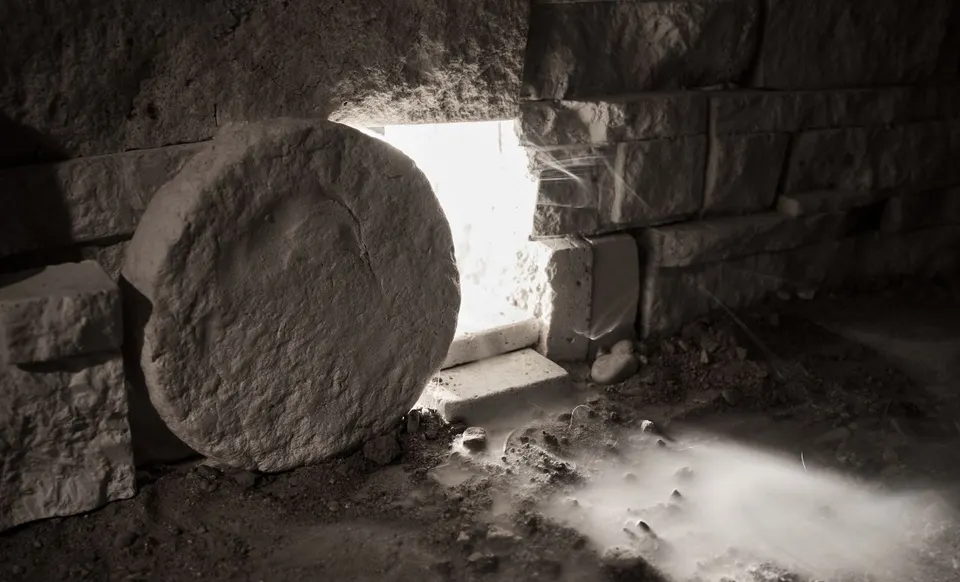
They found the stone rolled away and the body missing (). That is the first shock of the empty tomb. It was not a private spiritual feeling. It was a physical absence where a body was supposed to be. The women were perplexed, exactly as most of us would be (). Confusion is a reasonable first response when reality does not match expectation.
God’s message was clear, even if belief was hard
Two angels appeared and asked a question that still echoes: “Why do you seek the living among the dead?” (). The point was not to mock their sorrow. It was to correct their assumption. Jesus was not misplaced. He was risen.
Then the angels did something important. They pointed back to Jesus’ own words: remember what He told you, that He would be delivered up, crucified, and rise on the third day (). This matters because it shows the problem was not a lack of information. The problem was the difficulty of believing what sounded impossible.
That struggle is not limited to the first century. Many people today reject the resurrection for the same reason: it does not fit inside natural categories. But Scripture does not ask us to build faith on vibes or cultural tradition. It calls us to listen to what God has said and let that shape what we believe.
The apostles called it nonsense at first
The women did what faithful people should do. They reported what they had seen and heard. Luke says the apostles did not believe them. The words seemed like an idle tale, something like nonsense (). That detail is embarrassing, which is one reason it has the ring of honesty. The story does not portray the disciples as heroes who instantly understood everything. It portrays them as people who had to be convinced.
That should encourage anyone who feels slow to believe. If faith were only for people who never wrestle, then the first witnesses would have been excluded. But Scripture shows that wrestling can be part of the path to conviction.
Peter ran toward the question
Luke then focuses on one response that feels deeply human. Peter got up and ran to the tomb (). He looked in and saw the linen cloths by themselves. Then he went home marveling at what had happened (). The text does not say Peter walked away with every question resolved. It says he could not dismiss it. The empty tomb pulled him forward.
There is something instructive here. Some people hear the resurrection and keep their distance. Others find they cannot let it go. They start reading. They start asking. They start testing what they have assumed. They move toward the evidence and toward the word of God because the question is too big to ignore.
A competing story still exists
Matthew records that the guards were bribed and told to spread a story: the disciples came by night and stole the body while the soldiers slept (). That explanation is old, and it is still repeated. It is also revealing. Even the opponents of Jesus conceded the tomb was empty. Their effort was not to deny the absence, but to explain it away.
That detail matters devotionally because it reminds us that faith has always had opponents. Belief has always come with pressure to treat the story as foolish. Paul said as much when he wrote that the word of the cross is folly to those who are perishing (). Some will always prefer an explanation from men over a message from God.
So the question becomes personal. When two explanations sit side by side, which one will you live by?
Faith grows by hearing the word, not by inherited impressions
One of the sermon’s strongest reminders is that many people build their idea of Bible events from secondhand depictions. Bits and pieces from media, fragments from childhood, and cultural Easter imagery can shape the story we think we know. But those impressions are a weak foundation for conviction.
Scripture points us back to a better source. “Faith comes from hearing, and hearing through the word of Christ” (). That means faith is not manufactured by self-talk. It is formed by listening carefully to what God has said, staying with it long enough for it to take root.
This is also why Jesus’ invitation is often framed with seeking. The person who really wants truth does not stop at surface-level familiarity. He reads. He listens. He searches. And in that process, the empty tomb stops being a distant event and becomes a living claim that demands a response.
What the risen Jesus changes in us
If Jesus is raised, then He is not merely a teacher from the past. He is Lord. He is alive. And that changes how we treat sin, purpose, suffering, and hope. It also changes how we view our own future. Resurrection means God has acted in history, and God will act again.
This is why the gospel does not end with information. It calls for transformation. The risen Christ is not meant to be admired from a distance. He is meant to be followed with the whole life.
And if you find yourself like Peter, marveling, unsettled, unable to dismiss what you have heard, do not treat that as an inconvenience. Treat it as mercy. Keep running toward the question. Keep reading. Keep listening. The empty tomb was written down so that you would believe, and so that belief would grow into a life that belongs to the risen One.