
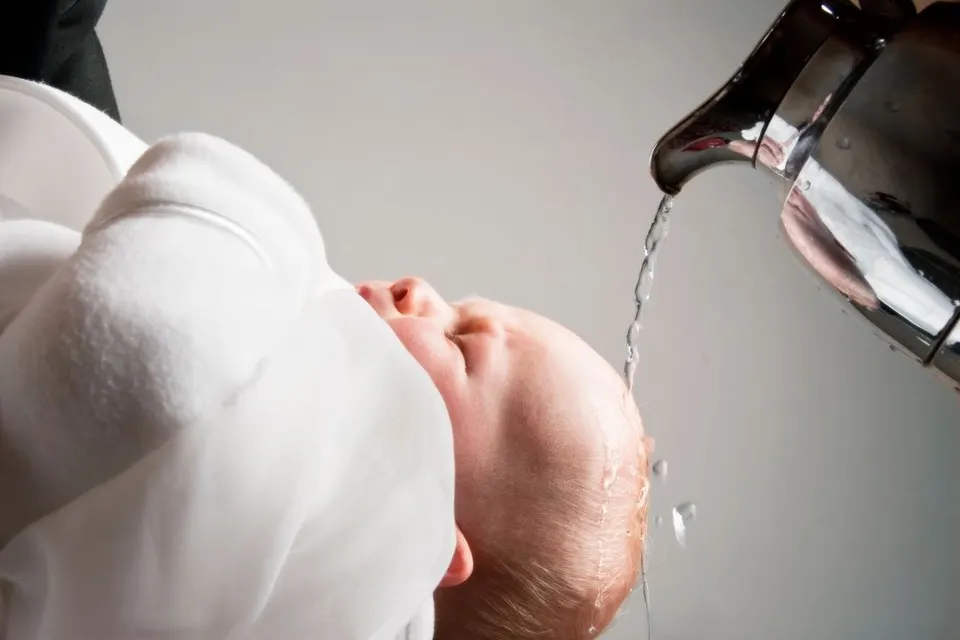
Churches of Christ do not baptize babies because baptism in the New Testament is joined with a personal response to the gospel. Those who were baptized first heard God’s message, believed in Jesus, and turned away from sin. An infant is not yet able to make that response.
This does not mean that babies are rejected by God. On the contrary, Scripture presents little children as precious to Him and does not hold them accountable for choices they are not yet capable of making.
If you were baptized or christened as an infant, or if you made that decision for your child, this is more than an abstract religious question. It deserves a thoughtful answer grounded in Scripture and offered with respect.
Who Was Baptized in the New Testament?
When we read the accounts of conversion in Acts, we find a consistent pattern: people heard the gospel, received it in faith, and were baptized.
When Philip preached in Samaria, for example, Scripture says:
“But when they believed Philip as he preached good news about the kingdom of God and the name of Jesus Christ, they were baptized, both men and women” ().
Those who were baptized were people capable of hearing the message and believing what they had heard.
Jesus connected baptism with belief:
“Whoever believes and is baptized will be saved, but whoever does not believe will be condemned” ().
Peter connected baptism with repentance:
“Repent and be baptized every one of you in the name of Jesus Christ for the forgiveness of your sins” ().
Faith itself comes through hearing God’s Word:
“So faith comes from hearing, and hearing through the word of Christ” ().
An infant cannot yet understand the gospel, place faith in Christ, or repent of sin. For that reason, baptizing an infant does not follow the pattern God gives in the New Testament. Biblical baptism is not an isolated ceremony; it is the obedient response of a person who has heard and believed the gospel.
The New Testament does mention entire households being baptized. Yet these accounts never identify an infant as being among them. Instead, the message was spoken to those present, and the households are described in connection with hearing, believing, or receiving the word (; ).
Are Babies Born Guilty of Sin?
The practice of infant baptism is often connected to the belief that a child inherits Adam’s guilt and must be baptized to have that guilt removed. Churches of Christ do not believe Scripture teaches that one person inherits another person’s guilt.
Through Ezekiel, God said:
“The soul who sins shall die. The son shall not suffer for the iniquity of the father, nor the father suffer for the iniquity of the son” ().
Although Adam’s sin brought terrible consequences into the world, Scripture treats guilt as personal. Each person is accountable to God for his or her own sin. Sin is described as lawlessness, something a person does in violation of God’s will ().
Jesus spoke of little children with tenderness and welcomed them into His presence:
“Let the little children come to me and do not hinder them, for to such belongs the kingdom of heaven” ().
He did not speak of them as condemned people awaiting a ceremony that would make them acceptable to God. Instead, He pointed to them as examples of the humility and dependence that belong to His kingdom.
After the death of his infant son, David said:
“But now he is dead. Why should I fast? Can I bring him back again? I shall go to him, but he will not return to me” ().
David knew that his child would not return to this life, yet his words expressed hope beyond their separation.
Taken together, these passages give us reason for comfort: babies are not condemned because they have not been baptized. They have not yet reached the point of personal moral accountability at which repentance is possible or required.
What If My Child Was Christened?
Parents who have their children christened or baptized usually do so out of sincere love. They want their children to belong to God, grow in faith, and receive His care. That desire should not be mocked or dismissed.
Sincerity, however, cannot change the meaning God gives to baptism. In the New Testament, baptism is the response of someone who personally believes in Christ and chooses to leave a life of sin behind.
Paul wrote:
“We were buried therefore with him by baptism into death, in order that, just as Christ was raised from the dead by the glory of the Father, we too might walk in newness of life” ().
Baptism pictures a burial and resurrection with Christ. The person being baptized is entering a new life through faith and obedience to Him. Loving parents can teach, guide, and pray for their child, but they cannot believe, repent, or obey the gospel on that child’s behalf.
This does not mean that an unbaptized baby is lost. Nor does it mean that a parent’s loving intentions were meaningless. It means that when a child becomes able to understand the gospel and place faith in Christ, the call to be baptized will become personal. It will be that person’s own response of faith and obedience to the Lord.
What Should I Do With This?
Read the conversion accounts in Acts 2, 8, 9, 10, and 16. As you read, notice what the people were taught, how they received the message, and when baptism took place. You will find baptism connected with hearing and responding to the gospel. You will not find an example of an infant being baptized.
If you were baptized or christened as a baby and have since come to believe in Jesus for yourself, consider whether you have personally responded to the gospel in the way these passages describe. This is not a reason for shame or fear. It is an invitation to examine the Scriptures honestly and follow Christ according to His Word.
Churches of Christ have no central earthly headquarters governing every congregation. Each congregation is responsible for following Christ and His Word, so no single church can speak for every group that uses the name “Church of Christ.” What we have presented here reflects what our congregation believes and what is generally taught among churches like ours.
Our desire is not simply to defend a tradition. We want to follow the pattern God has revealed in Scripture.
Weigh It Against God’s Word
At the Memorial church of Christ, we would rather invite you to examine the Scriptures than ask you merely to accept our conclusions. Bring your questions. Open the Bible with us. Test what we teach against what God has said.
Plan your visit. Come as you are, and ask us anything.
If you want to see for yourself what the Bible says about becoming a Christian, start here.
When we meet:
- Sunday: Bible Class 9:00 am, Worship 10:00 am, Worship 6:00 pm
- Wednesday: Bible Class 7:00 pm