
Ask most people whether they need permission to do a thing and they will bristle. We are raised on stories where the hero ignores the rules and turns out to be right, and there is enough truth in them that we half believe them. Sometimes rules are bad. But underneath all of it sits a question that never goes away, and most of us go years without asking it out loud: whose permission am I acting on?
Everyone Is Following Someone
Here is the part that gets missed. Nobody operates without an authority. In the absence of one handed to us, we invent our own or borrow someone else’s, usually without noticing which. The person who says they answer to no one has simply made themselves the standard and stopped auditing the decision.
Scripture is honest about how that goes. “I know, O Lord, that the way of man is not in himself, that it is not in man who walks to direct his steps” (). That is not an insult. It is a description of the equipment. We are not built to be our own final reference point, and the evidence for that shows up in every life that has tried it.
The Right Belongs to the One Who Made It
Authority is the power or right to give orders, make decisions, and enforce obedience. In ordinary life it comes with a position. A police officer can enforce the law in ways a bystander cannot, and a judge can pronounce a sentence no one else in the room may pronounce, because of the role each occupies.
God’s claim is different in kind. It is not conferred, it is inherent, and it rests on the plainest fact in Scripture. “In the beginning, God created the heavens and the earth” (). He made it. Everything else follows from that. Isaiah puts the good news in exactly these terms: “How beautiful upon the mountains are the feet of him who brings good news, who publishes peace, who brings good news of happiness, who publishes salvation, who says to Zion, Your God reigns” (). Your God reigns is not the fine print of the gospel. It is close to the headline.
Nor does the New Testament soften it. Peter closed his sermon at Pentecost by saying, “Let all the house of Israel therefore know for certain that God has made him both Lord and Christ, this Jesus whom you crucified” (). Paul described Christ as head of the body, the church, “that in everything he might be preeminent” ().
We Cannot Know a Mind That Does Not Speak
There is a simple point buried in 1 Corinthians 2 that settles more arguments than it gets credit for. Paul asks who knows a person’s thoughts except that person’s own spirit, and answers that in the same way “no one comprehends the thoughts of God except the Spirit of God” ().
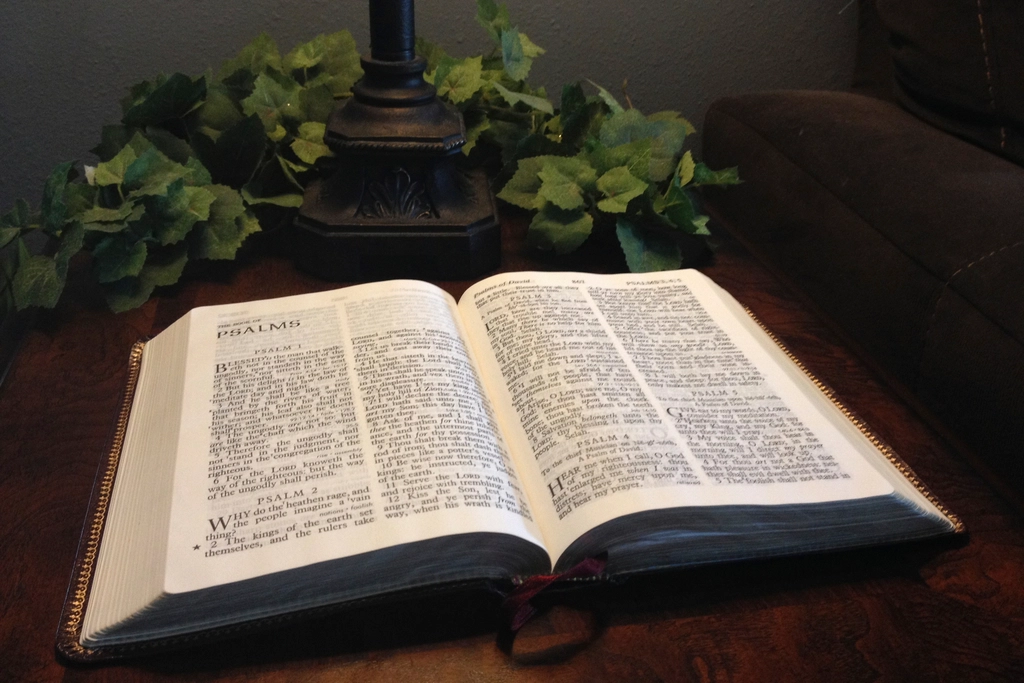
I do not know what you are thinking unless you tell me, and you do not know what I am thinking unless I tell you. Neither of us knows anything about the mind of God except what he has chosen to say. So the question of what pleases him is not open to inference or consensus. It is a question of what was revealed and written down.
Three Men and One Attitude
Jude writes a single sentence about people who abandoned the faith, and it names three: “Woe to them! For they walked in the way of Cain and abandoned themselves for the sake of gain to Balaam’s error and perished in Korah’s rebellion” (). Three unrelated stories, centuries apart. Why these three?
Cain was warned directly. God told him that if he did well he would be accepted, and that if he did not, sin was crouching at the door and he must rule over it. He did not do well, and instead of ruling over it, he let it rule him. Balaam knew what God had said. He simply wanted what the money could buy more than he wanted to be right, so he went looking for a way around a clear answer. Korah told Moses that all the congregation was holy and asked why Moses should be exalted above the assembly, which sounds almost humble until you hear what it actually means. We should get a say in this.
One attitude runs through all three. My way is better. My thinking is higher. My need outweighs what God has said. Strip the circumstances away and every sin looks like that. “Sin is lawlessness” (), and lawlessness is just this question answered wrongly.
Permission, Not Possession
There is a second sense of the word authority worth holding onto: the right to act in a specified way, delegated from one person to another. Permission, in other words. A driver’s license does not make anyone an authority on the roads. It records that a greater authority has authorized this person to drive.
That is the sense in which anyone acts on God’s behalf. “All authority in heaven and on earth has been given to me” (), Jesus said, and the giving is the point. Even Christ spoke that way about his own ministry: “I have not spoken on my own authority, but the Father who sent me has himself given me a commandment, what to say and what to speak” (). If that is how he framed it, it is difficult to see how anyone else gets to frame it differently.
The Mind That Makes It Livable
None of this is meant to feel like a cage. The posture Scripture asks for is the one Jesus took in the garden, and he took it under far more pressure than we will: “Not my will, but yours, be done” ().
Which leaves a practical test for an ordinary week. “Whatever you do, in word or deed, do everything in the name of the Lord Jesus, giving thanks to God the Father through him” (). In his name. On his authority. Not because a person said so, and not because it is what we have always done, but because it traces back to what he actually said.